
Harshul Rai's Insights on Eco-Friendly Packaging for Sustainable Beauty Products
- hnhhealthcare88
- Jan 28
- 3 min read


The beauty industry is moving to sustainability and packaging contributes to the minimal environmental impact. Harshul Rai, a visionary and leader in the healthcare and cosmetics industry, presents practical information on environmentally friendly products, which are in line with the consumer demands of green products. His style is focused on innovation, quality and aesthetics are not jeopardized.
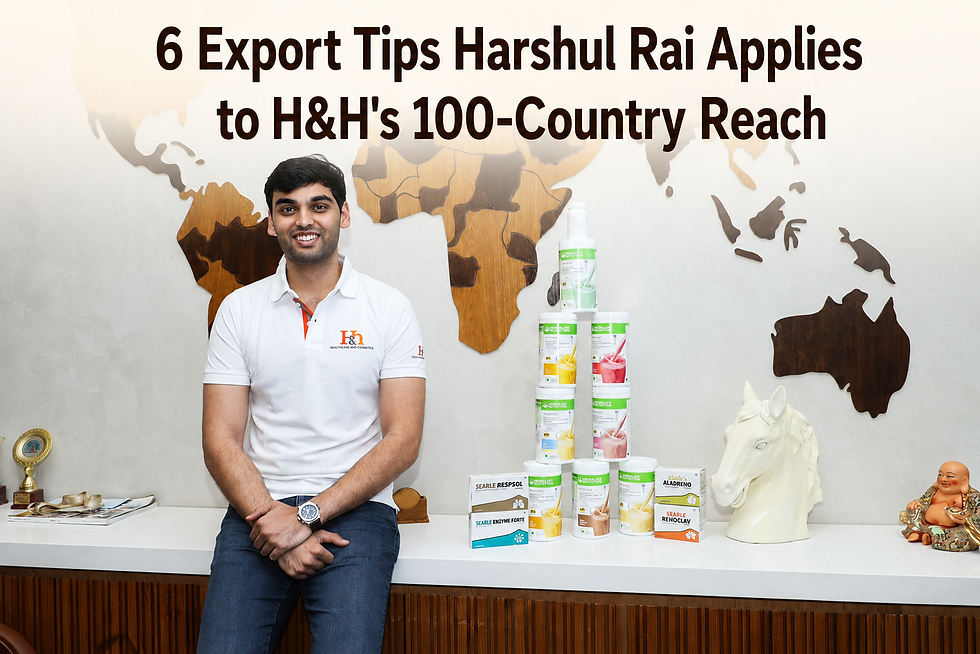
Harshul Rai is based in Indore and is Director of H&H Healthcare and Cosmetics Pvt. Ltd. where he pioneers innovations in nutraceuticals and beauty formulations. Having more than 20 years experience in the industry, he is an advocate of science-supported solutions that encompass lab-to-shelf sustainability. The recent news about Harshul Rai has been used to show his contribution on the construction of eco-friendly manufacturing plants, and thus he is one of the experts to consult on the topic of sustainability.
Why Eco-Friendly Packaging Matters in Beauty?
Traditional plastic packaging pollutes and the number of its units that make landfills annually amounts to billions. Bio-degradable solutions reduce the amount of waste and also attract environmentally conscious consumers. Rai emphasizes that green packaging makes the product intact and it indicates brand morality, which enhances loyalty in a market where 70 percent of consumers choose sustainable products.
Key Insights from Harshul Rai
Rai also recommends recyclable and compostable substances, including sugarcane or cornstarch plant-based plastics. These alternatives cut down carbon footprints up to 50¥ relative to those made of petroleum. Instead, he suggests beginning with audits to find the hotspots of packaging waste and collaborate with certified suppliers to find traceable low-impact sources.
When moisture and light sensitivity is paramount as it is with beauty products, Rai recommends recycled glass or aluminum, which is durable, but can be completely recycled. Among his ideas are minimalistic designs that help save materials such as airless pumps to lengthen shelf life and prevent excessive packaging. In the case of cosmetics companies, he recommends the use of post-consumer recycled (PCR) plastics to comply with such regulations as the Plastic Waste Management Rules in India.
Another important point that Rai highlights is the use of lifecycle assessment to make sure the packaging is really green, not just in production, but also in disposing of. This is evidenced by Harshul Rai Indore initiatives, who in his company, embraces the use of renewable energy in his facilities, which connects manufacturing to sustainable output.
Real-World Applications and Benefits
Eco-friendly packaging of creams and serums at H&H is performed in bamboo jars with soy-based inks, which increases the competitiveness of the brand. This does not only reduce the cost in the long run due to effective sourcing, but it also qualifies to gain green certifications. The brands using the strategies by Rai claim to have reduced their wastages up to 20-30%, as well as have increased their presence in the marketplace over their rivals.
Another pillar is consumer education; and the labeling of recyclability develops trust. The leadership of the industry of Indore led by Rai urged collaboration standards and he affected the local suppliers to scale green tech higher. The latest trends in his direction are the testing of edible films to serve one-serving products, an innovative move in sustainable beauty.
Challenges and Solutions
Adopting eco-packaging will lead to increased initial expenses, yet it can be offset by gradual adoption and renewable subsidies (Rai). Claim verification through supply chain transparency using QR codes, neutralizes the greenwashing issue. Seeking training on these materials makes the adoption easy.
Conclusion
The ideas expressed by Harshul Rai are enlightening in the way in which the beauty industry can adopt environmentally friendly packaging to promote sustainability and creativity. Firms can save the planet and attract the conscious consumers by focusing on recyclable and low-impact solutions.

Comments