
Harshul Rai's Pharma Giant Tie-Ups: Co-Branded Supplements Taking India Global
- hnhhealthcare88
- Jan 23
- 3 min read


The pharmaceutical industry in India is an upsurge and the new collaborations are taking nutraceuticals and wellness products to the global arena. Leading this development, strategic partnerships between local players and multinational pharma conglomerates are transforming the markets in supplements. These partnerships combine the best research coupled with the local manufacturing skills to develop co-branded supplements that will fulfill the international standard and fit the increasing demand of health-conscious solutions.
The Rise of Strategic Pharma Partnerships
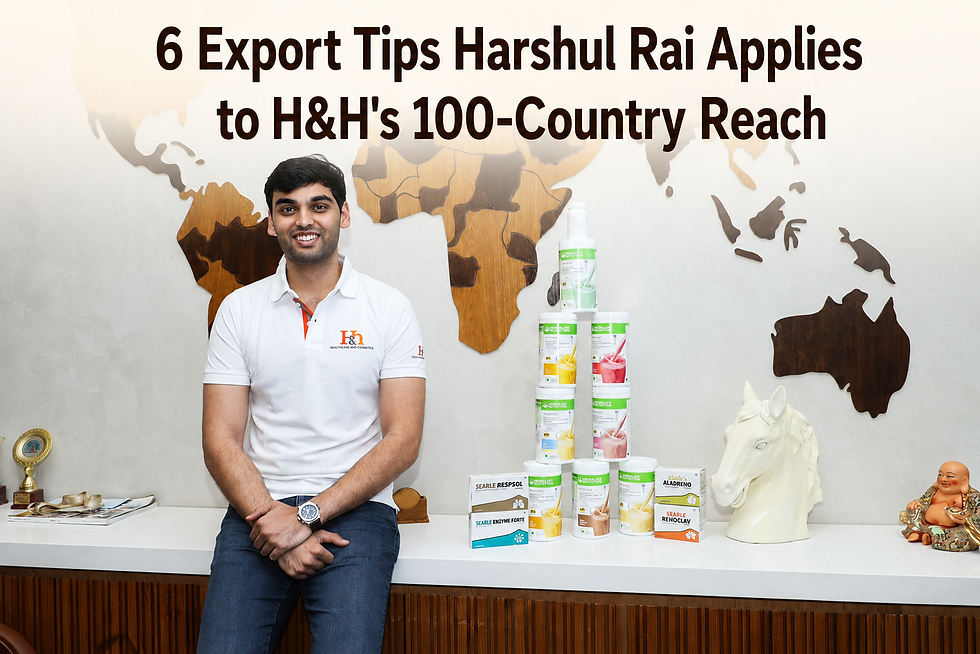
Recently, the alliances are being spearheaded by the visionary directors. As an example, Harshul Rai Indore has become one of the primary agents of building relations with multinational corporations. As an influential personality in the industry, Harshul Rai is leading the efforts that focus on quality and scalability. His work highlights a change to co-branded supplements, the things that are developed and promoted by the Indian companies in collaboration with the world pharmaceutical giants such as Pfizer or Nestle Health Science.
Through these partnerships, the giants utilize the economies of scale in the cost-effective production of India and the R&D that the giants possess. Co-branded brands may include immunity enhancers, joint care formulas and brain enhancers, which are developed with clinically tested components like curcumin, ashwagandha and probiotics. This model does not only increase the credibility but also, compliance to strict regulations such as FDA approvals, are met, and the Indian-origin products are ready to be exported to the market.
Navigating Challenges in Global Expansion
Expansion into foreign markets is not an easy task. Potential threats are supply chain disruptions, regulatory differences, and threats of counterfeits. However, tie-ups among pharma giants have a way of countering these by sharing technology and joint venture. In India, plants in hubs such as Indore are converting to GMP (Good Manufacturing Practices) to allow it to easily export to the US, Europe, and Southeast Asia.
Industry news as relayed by Harshul Rai indicate how such partnerships have increased the amount being exported by a whopping 25 percent in the previous year going by the FICCI reports. Directors such as Harshul Rai Director highlight the importance of sustainable sourcing by engaging in herbal extracts suppliers such as organic farms to attract the interest of an environmentally friendly consumer in the foreign market. Expanding reach is enhanced through digital marketing, and millennials (who demand personalized wellness) are targeted by AI-driven campaigns.
Market Impact and Consumer Benefits
Supplements that are co-branded are changing consumer behavior. Indians and international purchasers would be looking in a post-pandemic world to preventative health. These products are not just affordable (usually 30-40% less expensive than pure imports) but also not less efficient. As an example, a co-branded omega-3 variant will be Swiss-precision lipid extraction technology from India with high bioavailability.
Indian exports have reached USD 2.5 billion in nutraceuticals in its last fiscal and the tie ups are expected to be USD 5 billion by 2028. This is not only creating employment in the R&D and packaging fields but is also making India a super power in wellness competing with China in exports of herbs.
In the future, the blockchain will be used in traceability and AI will be used in personalised formulations. The Pharma giants are investing in Indian biotech startups and there is also a virtuous cycle of innovation.
Conclusion
India wellness industry Pharma giant tie up through co- branded supplements are launching the Indian wellness industry across the world with a fine combination of tradition and technology. Leaders behind such endeavors will guarantee economic development, medical justice, and global recognition. With the rush in demand, ethics and innovation should be at the forefront of stakeholders in order to keep it going. This wave will bring successful planetary health, one strategic partnership at a time.

Comments